A successful borage crop is usually decided before the plant is large enough to attract attention. Planning determines whether seeds are started at an appropriate time, whether the growing site can support mature growth, whether transplant shock is minimized, and whether the gardener has a clear response when weather changes. This article uses a practical workflow format: assess the plant, prepare the site, start seeds or propagation material, establish the young plant, and manage the season with evidence rather than guesswork.
Plant Profile Before You Plant
| Topic | Plant-specific information |
|---|---|
| Common name | Starflower, Bee Bread |
| Scientific name | Borago officinalis |
| Plant family | Boraginaceae |
| Genus / species | Borago / B. officinalis |
| Category | Herbs |
| Growth and botanical notes | An annual with bristly stems and bright blue star-shaped flowers. |
| Phenology or seasonal timing | Blooms continuously from summer to frost once established. |
| Recorded habitat | Open sunny fields and edges of woodlands. |
| Propagation | By seed. |
Step 1: Define the Goal for Your Borage Planting
Before opening a seed packet, define what you want from the plant. The source record lists its uses as “Flowers are edible (cucumber flavor); leaves used in salads. Major nectar source for bees.”. It describes the plant as “An annual with bristly stems and bright blue star-shaped flowers.”. Those two facts help determine how much space, time, support, and harvest planning may be necessary.
A useful planning question is: “Am I growing this plant as a temporary seedling project, a container specimen, a season-long garden crop, a perennial investment, an ornamental feature, or a harvestable food plant?” The answer affects everything that follows. A small windowsill setup may be ideal for germination and learning, while a mature crop may require a larger container, raised bed, in-ground row, trellis, or long-term planting area.
Step 2: Match Your Location to the Plant
The most useful starting point is to align the growing site with the recorded habitat and cultivation notes rather than treating every plant as interchangeable. The dataset describes the habitat as “Open sunny fields and edges of woodlands.” and gives this cultivation direction: “Easy from seed; self-sows prolifically. Prefers full sun to partial shade.”. Its stated tolerance profile is “Moderate drought tolerance; will wilt in intense noon heat but recover in evening.”. In practice, observe drainage, sun exposure, seasonal temperatures, and the pace at which the growing medium dries. Those conditions determine whether a plant can use water and nutrients efficiently, whether roots remain aerated, and how much stress it experiences during transplanting or heat, cold, and wind events.
Site-Assessment Checklist
- Observe how many hours of direct or filtered sunlight the intended area receives.
- Check whether water pools after rain or runs off immediately.
- Note wind exposure, reflected heat from walls or pavement, and nearby shade changes through the season.
- Consider how close a hose, water source, or indoor growing area is to the plant.
- Plan enough room for the documented growth habit: An annual with bristly stems and bright blue star-shaped flowers..
- Keep a label with the plant name and cultivar from the start.
Step 3: Prepare the Growing Medium and Containers
The goal of a growing medium is not to be “rich” in an abstract sense. It is to support roots with stable moisture, usable nutrients, adequate oxygen, and physical structure. In the ground, assess texture and drainage. In containers, use drainage holes and a medium that remains open enough for air to reach the root zone. Avoid placing containers where drainage water cannot escape.
If you are changing soil chemistry or applying fertilizer, use a reasoned approach. Soil testing is more informative than assuming every garden needs the same amendment. A plant can show poor growth because of temperature, root confinement, drainage, watering frequency, pests, disease, or nutrient availability; adding more fertilizer cannot correct every problem.
Step 4: Start Borage From Seed or Propagation Material
The source record states: “Easy from seed; self-sows prolifically. Prefers full sun to partial shade.”
The recorded propagation method is: “By seed.”
Use those points with the current instructions supplied for your exact seed lot. Record your sowing date, the cultivar name, the container or bed used, and early observations. Consistent labels prevent one of the most common home-garden failures: losing track of what was planted where.
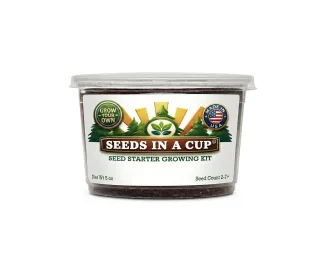
For a beginner, classroom, gift recipient, or busy gardener who wants a simple entry point, the Borage Starflower Bee-Friendly Kit | Seeds In A Cup® from Seeds In A Cup® can provide recyclable clear planter, nutrient-rich potting soil, non-GMO seeds, mini-greenhouse lid. The plant-specific starter guidance in the dataset is: “The Seeds In A Cup® kit shows how the fuzzy seedlings of borage protect themselves from early-season cold.”. Treat the kit as a starting system: once the seedling outgrows its space or its crop type requires a permanent bed, larger container, or garden row, transition it thoughtfully rather than forcing mature growth in an undersized vessel.
Step 5: Establish Seedlings Without Avoidable Stress
Seedlings are vulnerable because their root systems are small and their leaves are still learning to manage intense outdoor conditions. When moving plants from a protected environment to a garden, expose them gradually to outdoor light, air movement, and temperature changes. Keep soil moisture reasonably stable during establishment, but do not keep roots constantly flooded.
If a young plant slows down after transplanting, inspect the site before assuming it needs more fertilizer. Check for planting depth problems, compacted roots, cold soil, unusually hot sun, wind, waterlogging, dry root zones, or pest feeding. Correcting the actual stress is more useful than adding several products at once.
Step 6: Use a Seasonal Care Rhythm
Early Growth
Focus on establishment: root health, steady moisture, adequate light, and regular observation. Remove weeds or competing plants that are clearly crowding the young plant. Avoid unnecessary pruning until you understand how the crop forms its harvestable tissue.
Midseason Growth
Monitor plant spacing, root-zone moisture, and foliage condition. The dataset's pest and disease note is “Aphids and powdery mildew.”. Inspect for that issue, but confirm any diagnosis before intervening.
Late Season, Harvest, or Dormancy
The source phenology note is “Blooms continuously from summer to frost once established.”. Use it to guide your attention toward harvest timing, flowering, seed formation, seasonal decline, or other relevant stages. For any overwintering or long-term care plan, verify the exact plant's cold response using current local guidance.
Most-Asked Planting Questions
How do you grow borage from seed?
Easy from seed; self-sows prolifically. Prefers full sun to partial shade.
What conditions does borage need to grow well?
The dataset associates this plant with “Open sunny fields and edges of woodlands.”. Its listed tolerance profile is “Moderate drought tolerance; will wilt in intense noon heat but recover in evening.”. Use those details as the primary site-selection framework.
How long does borage take to mature or reach harvest?
Blooms continuously from summer to frost once established.
Can borage be grown in a container?
Container success depends on the mature root system, plant size, and crop goal. Use a container with drainage, enough volume for the plant's mature stage, and a plan for transplanting if the starter vessel is temporary.
What pests or diseases affect borage?
Aphids and powdery mildew.
Garden Management Questions
How do you prevent common borage problems?
Use clean growing media, adequate spacing, sound drainage, regular inspection, and prompt removal of clearly diseased plant material. Avoid treating symptoms by guesswork; match any intervention to an identified cause.
How do you harvest or use borage?
Flowers are edible (cucumber flavor); leaves used in salads. Major nectar source for bees.
Which borage varieties or cultivars should gardeners consider?
‘Alba’ (White flowers).
Is borage safe around pets, children, or people with allergies?
Safe for consumption; excessive use of leaves should be avoided due to trace alkaloids.
Can borage be propagated or grown again?
By seed.
Sources and Local Adaptation
The dataset identifies the following reference starting points for further study: The Herb Society of America, World Flora Online. Before acting on a site-specific question such as pesticide selection, disease diagnosis, regional planting dates, or pet exposure, verify the current guidance directly with an applicable university extension service, botanical institution, seed supplier, or veterinary authority. Recommendations can differ by cultivar, climate, product label, and local regulation.
Closing Checklist
- Use the exact plant identity and current seed-packet direction as your starting point.
- Match your growing location to the source record's habitat and tolerance notes.
- Give roots drainage, oxygen, and adequate room.
- Transition seedlings gradually when conditions change.
- Identify plant problems before treating them.
- Harvest or use only confirmed plant parts in ways appropriate to the exact species.