Germination01
14-30 days

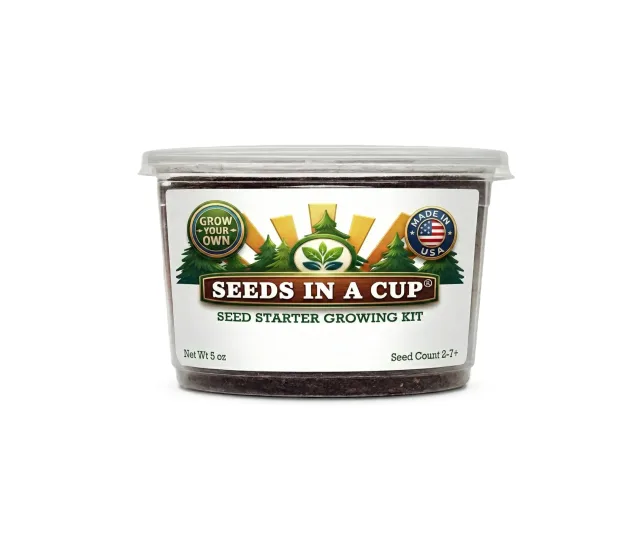
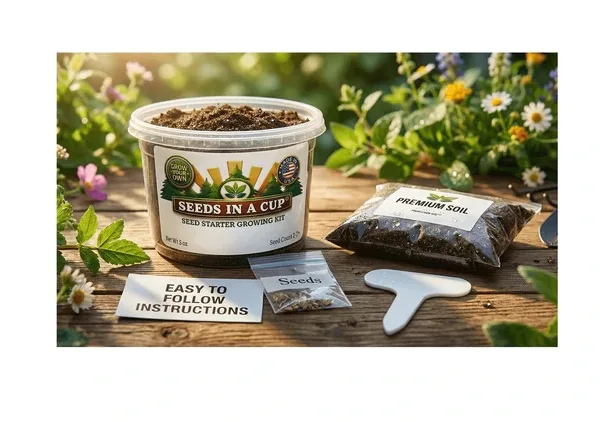
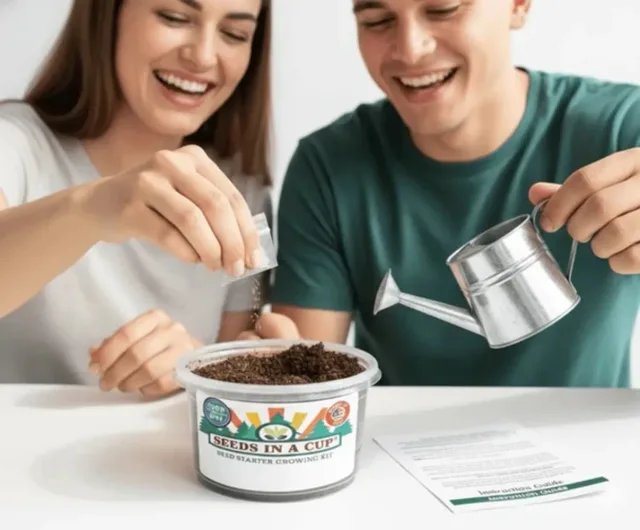
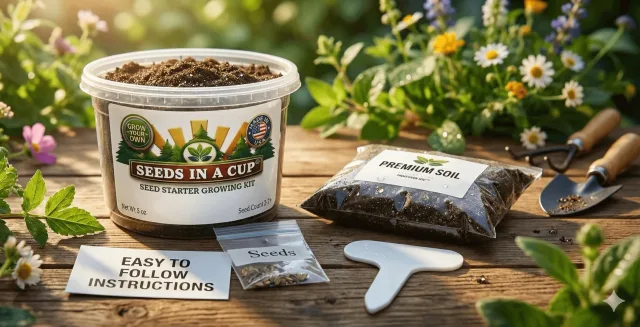

Gallery includes shared Seeds In A Cup® brand imagery. Plant-specific packaging may differ.
BOTANICAL NAMEWisteria frutescens
USD 14.99
100 in stock
American wisteria drapes a trellis in cascades of fragrant purple blooms — a native, better-behaved cousin of the Asian vines.
Have a question about this kit?
Ask our team →Get to know your plant
The growing details, all in one place.
14-30 days
Full Sun to Partial Shade (4-8 hours daily)
65-75F (after scarification)
Check the directions supplied with your seed variety.
THE PLANT NOTEBOOK
Accepted name Wisteria frutescens (L.) Poir. (GBIF backbone, accepted). Synonyms per NC State and the Wildflower Center: Kraunhia frutescens, Kraunhia macrostachya, Wisteria frutescens var. macrostachya and Wisteria macrostachya. Kentucky wisteria is sometimes treated as var. macrostachya. Named cultivars such as 'Amethyst Falls', 'Nivea' and 'Alba' will not come true from seed. This native species is distinct from the invasive Asian wisterias (W. sinensis, W. floribunda and their hybrid W. x formosa).
American wisteria is a native deciduous vine that twines around its support. NC State lists it for USDA zones 5a to 9b, while the Wildflower Center gives zones 5 to 8. It flowers best in full sun in moist, slightly acidic, humus-rich soil. Give it a sturdy arbor, pergola or trellis, and avoid chain-link fencing, where the stems become nearly impossible to remove. Sources: W1, W2, W3
Not verified. We could not find an extension or seed-manual protocol for this species, so we can't confirm whether soaking, nicking (scarification) or cold stratification is needed. NC State says growing it from seed is very slow. Sources: W1
Not verified. We found no authoritative germination temperature or time for American wisteria seed. In the wild, the pods ripen in late summer and usually split open in fall. Sources: W1
American wisteria dislikes being transplanted, so move it out of the cup with as little root disturbance as you can and choose its permanent site carefully. Full sun encourages flowering later on. Very rich soil mostly produces extra leaves. Sources: W1, W3
The starter cup is only a temporary home. This is a long-lived woody vine that can reach 15–40 feet, and it dislikes being transplanted. Move the seedling into a deep pot or its permanent spot beside a sturdy support with as little root disturbance as possible. Sources: W1
It is a fast-growing, long-lived woody vine, about 15–40 feet long (NC State) or 25–30 feet (Wildflower Center), and 4–8 feet wide. It develops a thick, coiled trunk, so it needs a strong support. Plan on regular pruning, including removing shoots from the base. Sources: W1, W2, W3
It does best in moist loam or clay rich in organic matter with acidic pH (NC State gives below 6.0). It handles occasional wet spells and seasonal flooding. The Wildflower Center notes low lime tolerance, and leaves may yellow (chlorosis) on alkaline soil. Sources: W1, W2, W4
NC State says it tolerates heat, drought and compacted soil, while the Wildflower Center rates drought tolerance as medium. FNPS says it tolerates salty wind but not direct salt spray or brackish flooding. Sources disagree on deer: NC State and the Wildflower Center call it deer resistant, but FNPS says deer find the leaves palatable. Sources: W1, W2, W4
The fragrant lilac-blue flowers hang in clusters up to about 6–9 inches long. They open in April–May (NC State) or May–June (Wildflower Center, UT), after the leaves come out, and only on new wood, with some light rebloom in summer. Seed-grown plants take years to reach blooming size; we found no verified number of years. Flowering can also be held back by frost-damaged buds, too much shade or too much fertilizer. Sources: W1, W2, W3, W4
Seed and softwood cuttings both work, but cuttings are preferred because seed-grown plants can take years to bloom. NC State notes that stem cuttings and shoots are much faster than seed. Named cultivars have to be grown from cuttings to stay true. Sources: W1, W2, W3
NC State lists honey fungus (Armillaria), leaf-chewing insects and other fungal diseases. UT Extension's Tennessee Yards says none of these are considered significant. Sources: W1, W3
The ASPCA lists wisteria as toxic to dogs, cats and horses. The toxic principles are lectin and wisterin glycoside, and signs include vomiting (sometimes with blood), diarrhea and depression. NC State says the seeds are the most toxic part, and eating one or two pods can cause nausea, repeated vomiting and stomach pain. Keep seeds and pods away from children and pets. Sources: W5, W1
Native, and the Alabama Extension lists it first among native alternatives to the invasive Asian wisterias. It is much less aggressive than Chinese wisteria, but it is still vigorous and spreads by suckers. Native Plant Trust notes it can be very hard to remove once established. Sources: W6, W3, W7
Grow it on arbors, pergolas, fences and walls, and in native, butterfly and pollinator gardens. It is a caterpillar host plant for the Zarucco duskywing, long-tailed skipper, marine blue and silver-spotted skipper, and adult butterflies feed on the flowers. Sources: W1, W2, W4
Native to the eastern and southeastern United States, from Virginia to Illinois and south to Florida and Texas. It grows in moist thickets, swampy woods and along stream and pond edges. Native Plant Trust lists it as introduced, not native, in New England. Sources: W1, W2, W7
Good questions grow here
Yes — American Wisteria seeds have a hard coat. Nick or sand each seed and soak overnight in warm water before sowing to help them sprout.
American Wisteria seeds typically sprout in 14-30 days at 65-75F when kept warm and evenly moist. Your guide lists the ideal conditions.
Growing details are supplied in the Seeds In A Cup® product catalog. Follow the instructions included with your specific kit.
Our information standards ↗