Germination01
7-14 days

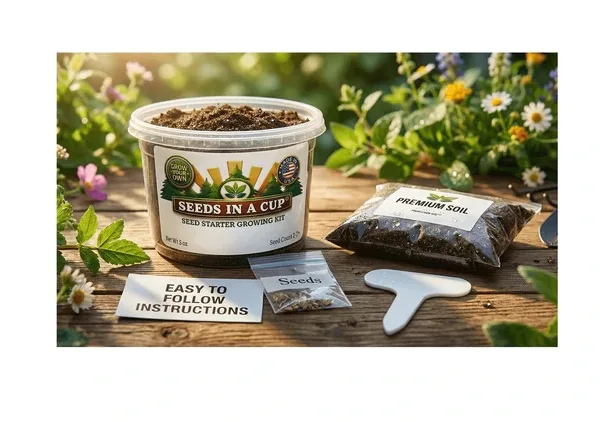
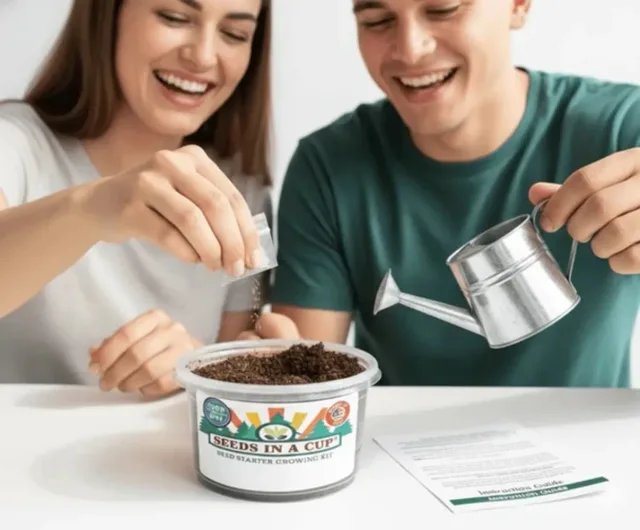

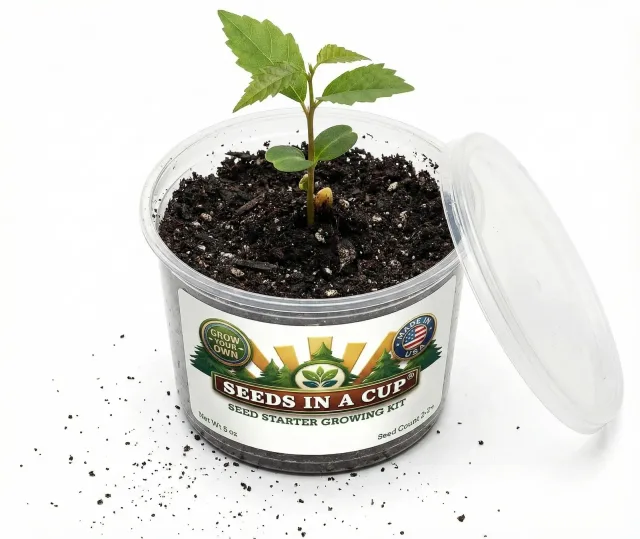
Gallery includes shared Seeds In A Cup® brand imagery. Plant-specific packaging may differ.
BOTANICAL NAMELycium barbarum
USD 14.99
100 in stock
Goji berries are the bright-red 'superfruit' of Himalayan fame, growing on a hardy shrub you can raise from seed at home.
Have a question about this kit?
Ask our team →Get to know your plant
The growing details, all in one place.
7-14 days
Full Sun (6-8 hours daily)
65-75F
USDA Zones 3-10 (Outdoor); All Zones (Indoor)
THE PLANT NOTEBOOK
World Flora Online and GBIF accept Lycium barbarum L. in the nightshade family (Solanaceae). Lycium chinense Mill. is a separate accepted species that is also grown as goji. 'Boxthorn' is a loose common name that also covers African boxthorn (L. ferocissimum), a different species on the US Federal Noxious Weed list. Named selections such as 'Crimson Star' and 'Phoenix Tears' are cultivars of L. barbarum.
Grow in full sun (light shade is tolerated) in free-draining soil. Utah State reports goji does best in light loam at slightly alkaline pH 7-8, does poorly in acidic soil, and must not sit in waterlogged ground. It is drought tolerant once established; give new plants about 1 inch of water a week. Sources: g1, g2
No pretreatment is called for in the sources checked. The RHS simply sows seed indoors in spring, and Utah State gives no seed treatment. Commercial seed guides disagree about soaking or chilling (Not verified), so treat it as optional. Sources: g1, g2
Sow indoors in spring and cover with only a very fine layer of mix. Germination is best at 64-68°F (18-20°C). Days to emergence is not verified from an authoritative source. Sources: g1
Keep seedlings in bright light and evenly moist but never waterlogged. Protect them under cover through their first winter and plant out the following spring. No pruning is needed in the first year. Sources: g1, g2
The cup is a temporary seedling stage. Move the plant to a larger pot, keep it protected through its first winter, then plant out in spring in a hole twice the width of the root ball and mulch around the base. Sources: g1, g2
A scrambling to upright, often spiny shrub: 3-6 ft when pruned, up to 12 ft unpruned (Utah State), or 10 ft tall by 13 ft wide or more (RHS). For spacing, Utah State suggests 4-5 ft apart in home gardens, while the RHS says at least 6.5 ft (2 m). Sources: g1, g2
Utah State lists USDA zones 4-7, and the RHS rates it fully hardy in the UK. Fruit quality is best in hot, dry conditions. Sources: g1, g2
Once established it tolerates wind, salty air and drought. It performs poorly in acidic soil and dislikes waterlogged roots. Sources: g1, g2
Purple flowers appear from late spring, and fruit turns orange-red about 35 days after full bloom, ripening from mid-summer to late fall. Plants are self-fruitful. They begin fruiting in 2-3 years and reach full production at 3-5 years. Utah State says fruit forms on current-year wood, while the RHS says previous year's stems; the sources disagree. Sources: g1, g2
Besides seed, goji can be grown from softwood or semi-ripe cuttings in summer, hardwood cuttings in winter, layering in autumn, or suckers dug in late winter. Utah State recommends named cultivars for fruit quality and yield, since seedlings may differ from them. Sources: g1, g2
Utah State reports goji gall mite (bead-like leaf galls), powdery mildew and blossom end rot from uneven watering. Aphids, leafhoppers, thrips and spider mites have been reported elsewhere, and birds take the fruit. Removing pepper, eggplant and black nightshade nearby helps reduce gall mite. Sources: g1, g2
Only fully ripe fruit is edible, according to the RHS. Most plants have spines, so wear gloves when handling. Pet toxicity is not verified: it was not found on the ASPCA pages checked. Sources: g1, g2
Goji suckers freely, usually from about year 3, and Utah State notes some areas consider it a weed because it spreads by suckers and seed. L. barbarum is not on the US Federal Noxious Weed list, which does include the related African boxthorn (L. ferocissimum). State weed lists were not verified. Sources: g1, g2, g5
Grown for its small orange-red berries, which can be eaten fresh, dried, juiced or frozen. Utah State notes the leaves are also harvested for tea. Sources: g2
Native range is described differently by different sources: the RHS gives Europe to China, while Utah State says warm regions of East and Southeast Asia. It is cultivated widely, including in the US. Sources: g1, g2
Good questions grow here
Yes — Goji Berry (Wolfberry) seeds have a hard coat. Nick or sand each seed and soak overnight in warm water before sowing to help them sprout.
Goji Berry (Wolfberry) seeds typically sprout in 7-14 days at 65-75F when kept warm and evenly moist. Your guide lists the ideal conditions.
Growing details are supplied in the Seeds In A Cup® product catalog. Follow the instructions included with your specific kit.
Our information standards ↗