Germination01
5-10 days




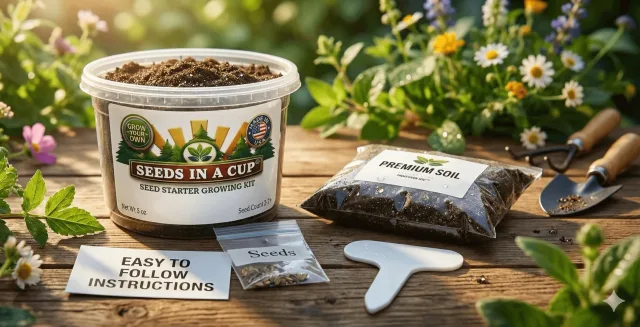

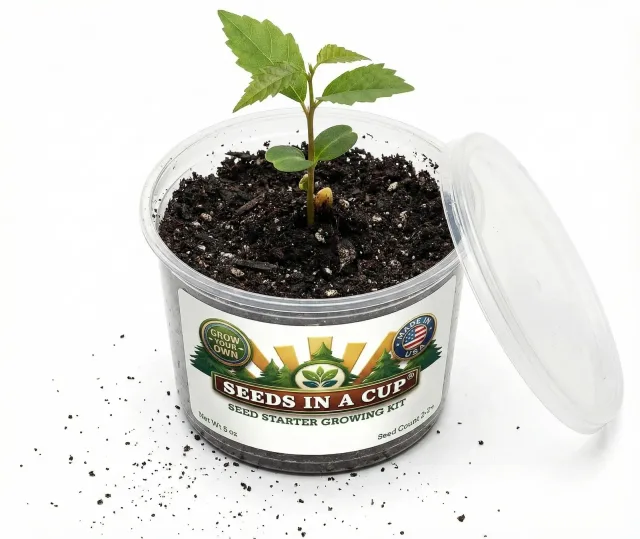
Gallery includes shared Seeds In A Cup® brand imagery. Plant-specific packaging may differ.
BOTANICAL NAMETagetes erecta
USD 10.99
100 in stock
Marigolds are the easiest flower to grow from seed — cheerful gold and orange blooms that also help keep garden pests away.
Have a question about this kit?
Ask our team →Get to know your plant
The growing details, all in one place.
5-10 days
Full Sun (6-8 hours daily)
70-80F
USDA Zones 3-11 (Outdoor); All Zones (Indoor)
THE PLANT NOTEBOOK
Tagetes erecta L. (Linnaeus, 1753). NC State lists Tagetes elongata as a former name. Some floras treat T. patula (French marigold) as a synonym of T. erecta, but horticulture keeps them separate. This guide covers T. erecta, the name on the product. It is a different plant from pot marigold (Calendula officinalis).
Start seed indoors about 4 weeks (Mississippi State) to 6-8 weeks (NC State) before your last frost date. Plant outside only after frost danger has passed, in full sun and average, well-drained soil. Avoid heavy fertilizing. Sources: S1, S2
Not needed. The sources reviewed give no stratification, scarification, or soaking step. Seed goes straight into a moist starting mix. Sources: S2, S3
Fast in warmth. Mississippi State reports 4-7 days at 75-80°F. A Benary grower guide gives 72-76°F, with the first root showing in 2-3 days. Light is not required, though it helps seeds sprout more evenly. Cover seed lightly with vermiculite and keep the mix moist but not soggy. Sources: S2, S3
After seedlings emerge, let the mix dry slightly between waterings. Move seedlings to cell packs or small pots at the true-leaf stage, before they become root-bound. Harden them off before planting outside. Sources: S2, S3
A starter cup is temporary. Marigolds grow quickly, and Benary notes plugs are ready to move in about 3-4 weeks. Transplant to a larger pot or the garden before roots circle the cup. Sources: S2, S3
NC State lists 1-4 ft tall and 1-2 ft wide. Height depends heavily on variety: dwarf F1 types can be about 9 in, and tall cut-flower series reach 36-40 in. Space plants 12-18 in apart. Tall plants may need staking. Sources: S1, S2, S3, S6
Grows best in full sun (6 or more hours) and tolerates partial shade. Prefers evenly moist, well-drained soil of average fertility, and tolerates clay and acid to alkaline pH. Sources: S1, S2, S6
Frost-tender: RHS rates it H2 (handles cool weather but not freezing). It handles some dryness and clay soil, and deer seldom damage it. Peak summer heat can briefly slow growth and flowering. Sources: S1, S2, S6
An annual that flowers from early summer to early fall. Time from sowing to first flower varies by source and variety: about 40-50 days (Arizona State), 8-10 weeks for a dwarf F1 (Benary), and 70-90 days for tall Giant types to reach full height (Mississippi State). Sources: S1, S2, S3, S4
Seed is the usual and best method. Marigolds can also root from softwood stem cuttings. Sources: S1, S4
Watch for thrips, slugs, and spider mites. Possible diseases include botrytis, leaf spot, phytophthora, powdery mildew, and other rots. Aster yellows, spread by leafhoppers, can cause yellowing and distorted flower growth. Sources: S1, S2, S6
NC State rates toxicity as low. Sap on broken skin, combined with sunlight, can cause redness, burning, or blisters, and the scent can irritate eyes and nose. Wear gloves when handling. ASPCA pet status for Tagetes: Not verified (ASPCA's 'marigold' entries cover Calendula, a different plant). Sources: S1, S6
Not verified. No US invasive or noxious listing was confirmed for this species. It is native to Mexico and Central America and is grown widely as a garden annual. Sources: S5
Used in beds, borders, containers, and as a cut flower. It attracts butterflies. The Aztecs grew it for ceremonies and decoration. Sources: S1, S2
Native to Mexico and Central America. It is cultivated worldwide. Sources: S1, S5
Good questions grow here
Moisten the included soil, sow your Marigold seeds at the depth on the instruction card, keep the planter warm and bright under the humidity lid, and mist until they sprout. Full steps are in your kit.
Marigold seeds typically sprout in 5-10 days at 70-80F when kept warm and evenly moist. Your guide lists the ideal conditions.
Growing details are supplied in the Seeds In A Cup® product catalog. Follow the instructions included with your specific kit.
Our information standards ↗The growing journal
8 articles matched to this plant.
Marigold · Growing guides
A comprehensive, data-grounded guide to growing Marigold, including seed starting, site planning, care, problems, harvest, safety, and FAQs.
Read articleMarigold · Growing guides
Learn how to plan, start, transplant, and care for Marigold with a structured seed-to-garden workflow and clear answers to common questions.
Read articleMarigold · Plant health
A practical troubleshooting guide for Marigold covering diagnosis, pest and disease prevention, environmental stress, seasonal care, and FAQs.
Read articleMarigold · Harvest & uses
Explore Marigold harvest timing, documented uses, variety selection, safe handling, propagation, and practical home-garden planning.
Read articleMarigold · Botanical profiles
An educational botanical profile of Marigold, including taxonomy, history, distribution, cultivation facts, safety considerations, and FAQs.
Read articlemarigold · Growing guides
Whether you are establishing a backyard garden, a community plot, or an indoor sanctuary, mastering the cultivation of Marigold requires a deep understanding of its biological pref
Read article