THE GROWING NOTEBOOK · Lamiaceae
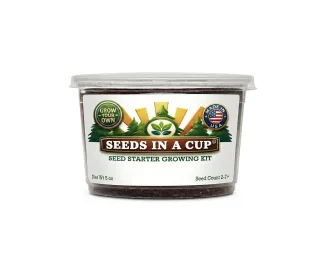
Basil Seeds In A Cup® Grow Kit
A basil grow kit care guide with journal-linked germination, moisture, lighting, disease, and harvest evidence.
100 in stock per variant · Contact us about ordering
Made in USA · Cleveland, OH
KNOW YOUR PLANT
Botanical Overview
Meet sweet basil
Sweet basil is Ocimum basilicum, a culinary herb in the Lamiaceae family. It is distinct from holy basil, Ocimum tenuiflorum. (Brindisi & Simon, Frontiers in Plant Science, 2023)
BEGIN WITH OBSERVATION
Germination & Early Growth
What the germination studies actually show
Basil germination temperature depends on cultivar and test conditions. Ekren and colleagues tested seeds at 20°C; their discussion reports a separate CIM-Saumya experiment with its highest germination percentage at 25°C. (Ekren et al., Journal of Plant Diseases and Protection, 2024)
The gel around basil seeds
Hydrated basil seeds produce mucilage, a water-holding coating. In an experimental comparison, retaining this coating improved emergence and survival relative to removing it. (Zhou et al., Horticulturae, 2022)
Observe basil seed germination in your grow kit
Identify your basil seeds
Record the cultivar on the packet and follow the sowing directions supplied with that seed lot.
Record the temperature
Measure your growing location and record the temperature alongside the sowing date. The cited germination work used defined laboratory conditions. (Ekren et al., Journal of Plant Diseases and Protection, 2024)
Observe emergence
Record emergence rather than promising a fixed germination day. Leave naturally hydrated seed coatings undisturbed during observation. (Zhou et al., Horticulturae, 2022)
A BASIL CARE GUIDE
Care & Maintenance
Moisture, with context
The seed coating can buffer water availability during establishment. That finding does not establish a universal watering volume or schedule for a household pot. (Zhou et al., Horticulturae, 2022)
Keep the canopy in mind
In net-house experiments, nighttime airflow reduced the humid, wet-leaf conditions associated with basil downy mildew. This supports attention to air movement; it does not guarantee that a household fan will prevent disease. (Cohen & Ben-Naim, PLOS ONE, 2016)
THE GROWING SPACE
Environmental Requirements
How to grow basil indoors: understand light
Greenhouse experiments found that basil biomass responded to supplemental light dose and that the response varied with season and light spectrum. A lamp’s color alone is therefore not a complete indoor-growing specification. (Solbach et al., Frontiers in Plant Science, 2021)
Growth responds to the light environment
In the same experiments, red supplemental light produced taller plants and larger leaves than the blue treatment. These are treatment-specific observations, not fixed dimensions for every basil plant. (Solbach et al., Frontiers in Plant Science, 2021)
NOTICE THE DETAILS
Common Problems & Solutions
Persistent leaf wetness and downy mildew
Peronospora belbahrii is the organism responsible for basil downy mildew. The cited experiments linked infection to free leaf moisture and sporulation to prolonged high nighttime humidity; reducing those conditions suppressed disease in the tested net-houses. (Cohen & Ben-Naim, PLOS ONE, 2016)
Browning after cold storage
Cold injury is one possible cause of browning in harvested basil. The postharvest review describes chilling sensitivity below about 12°C; browning alone is not a diagnosis. (Brindisi & Simon, Frontiers in Plant Science, 2023)
FROM GROWING TO LEARNING
Harvesting & Use
Fresh leaves and their aroma
Sweet basil is used as a fresh culinary herb. Its aroma and keeping quality are affected by handling and storage, so a universal shelf-life promise would be misleading. (Brindisi & Simon, Frontiers in Plant Science, 2023)
Seeds In A Cup® Integration
Our mission is simple, fun, educational growing. Use your basil grow kit as a notebook in action: label the seeds, record observations, and compare changes over time.
Follow the directions included with your kit. The cited experiments studied plants and growing systems; they did not independently test or endorse Seeds In A Cup® products.
Explore this kitFAQ Section
What is the scientific name of basil?
Sweet basil is Ocimum basilicum, a culinary herb in the Lamiaceae family. It is distinct from holy basil, Ocimum tenuiflorum. (Brindisi & Simon, Frontiers in Plant Science, 2023)
What is the optimal germination temperature for basil?
Basil germination temperature depends on cultivar and test conditions. Ekren and colleagues tested seeds at 20°C; their discussion reports a separate CIM-Saumya experiment with its highest germination percentage at 25°C. (Ekren et al., Journal of Plant Diseases and Protection, 2024)
Why do wet basil seeds develop a gel coating?
Hydrated basil seeds produce mucilage, a water-holding coating. In an experimental comparison, retaining this coating improved emergence and survival relative to removing it. (Zhou et al., Horticulturae, 2022)
How often should I water basil seeds?
The seed coating can buffer water availability during establishment. That finding does not establish a universal watering volume or schedule for a household pot. (Zhou et al., Horticulturae, 2022)
Does airflow matter in basil care?
In net-house experiments, nighttime airflow reduced the humid, wet-leaf conditions associated with basil downy mildew. This supports attention to air movement; it does not guarantee that a household fan will prevent disease. (Cohen & Ben-Naim, PLOS ONE, 2016)
Can grow-light color alone tell me how to grow basil indoors?
Greenhouse experiments found that basil biomass responded to supplemental light dose and that the response varied with season and light spectrum. A lamp’s color alone is therefore not a complete indoor-growing specification. (Solbach et al., Frontiers in Plant Science, 2021)
Why can basil plants grow to different shapes under different lights?
In the same experiments, red supplemental light produced taller plants and larger leaves than the blue treatment. These are treatment-specific observations, not fixed dimensions for every basil plant. (Solbach et al., Frontiers in Plant Science, 2021)
What conditions favor basil downy mildew?
Peronospora belbahrii is the organism responsible for basil downy mildew. The cited experiments linked infection to free leaf moisture and sporulation to prolonged high nighttime humidity; reducing those conditions suppressed disease in the tested net-houses. (Cohen & Ben-Naim, PLOS ONE, 2016)
Why can harvested basil brown in cold storage?
Cold injury is one possible cause of browning in harvested basil. The postharvest review describes chilling sensitivity below about 12°C; browning alone is not a diagnosis. (Brindisi & Simon, Frontiers in Plant Science, 2023)
What is the main culinary use of sweet basil?
Sweet basil is used as a fresh culinary herb. Its aroma and keeping quality are affected by handling and storage, so a universal shelf-life promise would be misleading. (Brindisi & Simon, Frontiers in Plant Science, 2023)
Schema & Structured Data
Scholarly sources
- Preharvest and postharvest techniques that optimize the shelf life of fresh basil (Ocimum basilicum L.): a review
Brindisi & Simon. Frontiers in Plant Science (2023). DOI: 10.3389/fpls.2023.1237577
Evidence location: Introduction; Storage conditions; Production methods - Optimizing germination performance of Lamiaceae family seeds: insights from research
Ekren et al.. Journal of Plant Diseases and Protection (2024). DOI: 10.1007/s41348-023-00857-y
Evidence location: Germination tests; Discussion, cultivar CIM-Saumya comparison - Production, Composition, and Ecological Function of Sweet-Basil-Seed Mucilage during Hydration
Zhou et al.. Horticulturae (2022). DOI: 10.3390/horticulturae8040327
Evidence location: Institutional repository abstract - Nocturnal Fanning Suppresses Downy Mildew Epidemics in Sweet Basil
Cohen & Ben-Naim. PLOS ONE (2016). DOI: 10.1371/journal.pone.0155330
Evidence location: Abstract; Discussion - Seasonal Efficiency of Supplemental LED Lighting on Growth and Photomorphogenesis of Sweet Basil
Solbach et al.. Frontiers in Plant Science (2021). DOI: 10.3389/fpls.2021.609975
Evidence location: Abstract; Seasonal influences; Conclusion
Read this page’s structured data
[
  {
    "@context": "https://schema.org",
    "@type": "WebPage",
    "@id": "https://seedsinacup.com/plants/basil#webpage",
    "name": "Basil Seeds In A Cup® Grow Kit",
    "url": "https://seedsinacup.com/plants/basil",
    "description": "A basil grow kit care guide with journal-linked germination, moisture, lighting, disease, and harvest evidence.",
    "about": {
      "@type": "Taxon",
      "@id": "https://seedsinacup.com/plants/basil#taxon",
      "name": "Ocimum basilicum",
      "alternateName": "Basil",
      "taxonRank": "species",
      "parentTaxon": {
        "@type": "Taxon",
        "name": "Lamiaceae",
        "taxonRank": "family"
      }
    },
    "citation": [
      "https://doi.org/10.3389/fpls.2023.1237577",
      "https://doi.org/10.1007/s41348-023-00857-y",
      "https://doi.org/10.3390/horticulturae8040327",
      "https://doi.org/10.1371/journal.pone.0155330",
      "https://doi.org/10.3389/fpls.2021.609975"
    ]
  },
  {
    "@context": "https://schema.org",
    "@type": "FAQPage",
    "@id": "https://seedsinacup.com/plants/basil#faq",
    "mainEntity": [
      {
        "@type": "Question",
        "name": "What is the scientific name of basil?",
        "acceptedAnswer": {
          "@type": "Answer",
          "text": "Sweet basil is Ocimum basilicum, a culinary herb in the Lamiaceae family. It is distinct from holy basil, Ocimum tenuiflorum.",
          "citation": [
            "https://doi.org/10.3389/fpls.2023.1237577"
          ]
        }
      },
      {
        "@type": "Question",
        "name": "What is the optimal germination temperature for basil?",
        "acceptedAnswer": {
          "@type": "Answer",
          "text": "Basil germination temperature depends on cultivar and test conditions. Ekren and colleagues tested seeds at 20°C; their discussion reports a separate CIM-Saumya experiment with its highest germination percentage at 25°C.",
          "citation": [
            "https://doi.org/10.1007/s41348-023-00857-y"
          ]
        }
      },
      {
        "@type": "Question",
        "name": "Why do wet basil seeds develop a gel coating?",
        "acceptedAnswer": {
          "@type": "Answer",
          "text": "Hydrated basil seeds produce mucilage, a water-holding coating. In an experimental comparison, retaining this coating improved emergence and survival relative to removing it.",
          "citation": [
            "https://doi.org/10.3390/horticulturae8040327"
          ]
        }
      },
      {
        "@type": "Question",
        "name": "How often should I water basil seeds?",
        "acceptedAnswer": {
          "@type": "Answer",
          "text": "The seed coating can buffer water availability during establishment. That finding does not establish a universal watering volume or schedule for a household pot.",
          "citation": [
            "https://doi.org/10.3390/horticulturae8040327"
          ]
        }
      },
      {
        "@type": "Question",
        "name": "Does airflow matter in basil care?",
        "acceptedAnswer": {
          "@type": "Answer",
          "text": "In net-house experiments, nighttime airflow reduced the humid, wet-leaf conditions associated with basil downy mildew. This supports attention to air movement; it does not guarantee that a household fan will prevent disease.",
          "citation": [
            "https://doi.org/10.1371/journal.pone.0155330"
          ]
        }
      },
      {
        "@type": "Question",
        "name": "Can grow-light color alone tell me how to grow basil indoors?",
        "acceptedAnswer": {
          "@type": "Answer",
          "text": "Greenhouse experiments found that basil biomass responded to supplemental light dose and that the response varied with season and light spectrum. A lamp’s color alone is therefore not a complete indoor-growing specification.",
          "citation": [
            "https://doi.org/10.3389/fpls.2021.609975"
          ]
        }
      },
      {
        "@type": "Question",
        "name": "Why can basil plants grow to different shapes under different lights?",
        "acceptedAnswer": {
          "@type": "Answer",
          "text": "In the same experiments, red supplemental light produced taller plants and larger leaves than the blue treatment. These are treatment-specific observations, not fixed dimensions for every basil plant.",
          "citation": [
            "https://doi.org/10.3389/fpls.2021.609975"
          ]
        }
      },
      {
        "@type": "Question",
        "name": "What conditions favor basil downy mildew?",
        "acceptedAnswer": {
          "@type": "Answer",
          "text": "Peronospora belbahrii is the organism responsible for basil downy mildew. The cited experiments linked infection to free leaf moisture and sporulation to prolonged high nighttime humidity; reducing those conditions suppressed disease in the tested net-houses.",
          "citation": [
            "https://doi.org/10.1371/journal.pone.0155330"
          ]
        }
      },
      {
        "@type": "Question",
        "name": "Why can harvested basil brown in cold storage?",
        "acceptedAnswer": {
          "@type": "Answer",
          "text": "Cold injury is one possible cause of browning in harvested basil. The postharvest review describes chilling sensitivity below about 12°C; browning alone is not a diagnosis.",
          "citation": [
            "https://doi.org/10.3389/fpls.2023.1237577"
          ]
        }
      },
      {
        "@type": "Question",
        "name": "What is the main culinary use of sweet basil?",
        "acceptedAnswer": {
          "@type": "Answer",
          "text": "Sweet basil is used as a fresh culinary herb. Its aroma and keeping quality are affected by handling and storage, so a universal shelf-life promise would be misleading.",
          "citation": [
            "https://doi.org/10.3389/fpls.2023.1237577"
          ]
        }
      }
    ]
  },
  {
    "@context": "https://schema.org",
    "@type": "HowTo",
    "@id": "https://seedsinacup.com/plants/basil#howto",
    "name": "Observe basil seed germination in your grow kit",
    "description": "A seed observation activity. Follow the sowing directions supplied with your cultivar.",
    "step": [
      {
        "@type": "HowToStep",
        "position": 1,
        "name": "Identify your basil seeds",
        "text": "Record the cultivar on the packet and follow the sowing directions supplied with that seed lot.",
        "url": "https://seedsinacup.com/plants/basil#step-1"
      },
      {
        "@type": "HowToStep",
        "position": 2,
        "name": "Record the temperature",
        "text": "Measure your growing location and record the temperature alongside the sowing date. The cited germination work used defined laboratory conditions.",
        "url": "https://seedsinacup.com/plants/basil#step-2"
      },
      {
        "@type": "HowToStep",
        "position": 3,
        "name": "Observe emergence",
        "text": "Record emergence rather than promising a fixed germination day. Leave naturally hydrated seed coatings undisturbed during observation.",
        "url": "https://seedsinacup.com/plants/basil#step-3"
      }
    ]
  },
  {
    "@context": "https://schema.org",
    "@type": "Product",
    "@id": "https://seedsinacup.com/products/basil#product",
    "name": "Basil Seeds In A Cup® Grow Kit",
    "description": "A basil grow kit care guide with journal-linked germination, moisture, lighting, disease, and harvest evidence.",
    "url": "https://seedsinacup.com/products/basil",
    "brand": {
      "@type": "Brand",
      "@id": "https://seedsinacup.com/#brand",
      "name": "Seeds In A Cup®"
    },
    "additionalProperty": [
      {
        "@type": "PropertyValue",
        "name": "Scientific name",
        "value": "Ocimum basilicum"
      },
      {
        "@type": "PropertyValue",
        "name": "Plant family",
        "value": "Lamiaceae"
      }
    ]
  }
]