Start growing
Very easy; thrives in full sun and almost any soil. Self-seeds readily.
GROW SOMETHING WONDERFUL
Rudbeckia hirta
From the first seed to the next new leaf. Explore your plant’s growing conditions, seasonal rhythm, and everyday care.
THE PLANT NOTEBOOK
Very easy; thrives in full sun and almost any soil. Self-seeds readily.
The Seeds In A Cup® methodology highlights 'Pioneer Species' behavior—watching these hardy plants thrive in 'disturbed' cup soil.
By seed or division.
Blooms from early summer to the first frost. Short-lived perennial or biennial.
Prairies, meadows, and roadsides.
High heat and drought tolerance; handles pollution well.
Powdery mildew and septoria leaf spot.
Safe; some individuals may experience skin irritation from the hairy stems.
A hardy wildflower with golden-yellow petals surrounding a dark brown/black central cone.
‘Indian Summer’, ‘Goldstrum’.
State flower of Maryland. iconic prairie restoration plant. long-lasting cut flower
Native to Central North America; naturalized across the continent.
Abundant and secure.
Named after the Rudbeck family; ‘hirta’ means hairy, referring to the stems and leaves.
Associated with an 18th-century poem by John Gay about a sailor's love for his 'Black-Eyed Susan'.
TURN KNOWING INTO GROWING
Seeds In A Cup® grow kits matched to black-eyed susan.
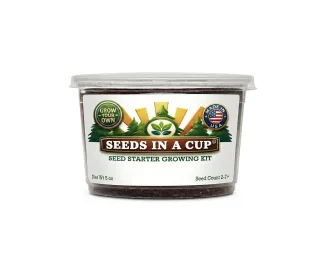
Seed Germination Kit
USD 10.99
100 in stock
Rudbeckia hirta
THE GROWING CONVERSATION
Have a question about black-eyed susan? Ask Buddy below or contact our team.