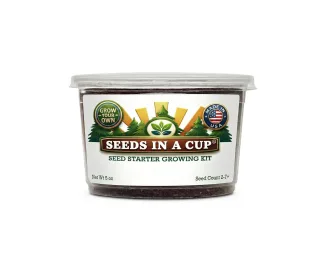
Crassula ovata (Mill.) Druce. The authority comes from a POWO search listing; the page itself returned 403. Older labels, including ASPCA and UF/IFAS, use the synonym Crassula argentea. 'Money plant' is also a common name for unrelated plants such as Epipremnum, Pachira, and Lunaria. This guide covers Crassula ovata only, the name on the product.
01Start growing
Growing jade from seed works, but expect slow progress. RHS and UW-Madison Extension both list seed as an option. Cuttings are far easier and faster, and are how jade is normally grown. Grow seedlings in a gritty cactus or succulent mix, in bright light, and let the mix dry between waterings once plants are established. Sources: S18, S19, S22
02Does the seed need special treatment?
Not required. No source reviewed calls for stratification, scarification, or soaking. RHS recommends sowing seed as soon as it is ripe, so fresh seed is best. Sources: S18, S23
03Germination
Seeds are tiny. Sow on the surface and press lightly, without covering. Keep the mix damp but not soggy at about 70°F, covered loosely to hold humidity. Reported times vary widely, from 5 days to 3 weeks (a Crassula-wide guide) to a few weeks to a couple of months (a jade-specific guide). Sources: S22, S23
04Seedling care
Keep seedlings in bright light out of harsh direct sun, and mist rather than soak. If mold appears, lift the cover for a few hours a day. Overwatering is the main threat, since it leads to leaf drop and stem rot. Sources: S19, S23
05How long the starter cup lasts
A starter cup is temporary. Move seedlings to a slightly larger, well-drained pot once they have a few sets of leaves. Jade eventually becomes a woody shrub that needs a heavy, stable container, and it can live for many years. Sources: S19, S23, S17
06Mature size & space
Eventually reaches 3-6 ft tall and 2-3 ft wide (NC State); RHS gives up to 1.5-2.5 m. Growth from seed is slow. RHS lists 5-10 years to maturity, and container plants stay smaller. Sources: S17, S18, S19
07Growing conditions
Needs bright light, ideally 4 or more hours of direct sun indoors, and a fast-draining cactus or succulent mix. Water deeply, let the mix dry, and water much less in winter. Sources: S17, S18, S19
08Weather & tolerances
Drought-tolerant once established. It can survive a light frost but freezing kills it, and it is hardy outdoors only in USDA zones 11-12 (NC State). Most US growers keep it as a houseplant. Sources: S17, S19
09Seasons, flowers & fruit
Rarely flowers indoors. Flowers form in response to long nights, cool temperatures around 55°F, and dry conditions in fall. NC State lists spring bloom and Wikipedia lists winter bloom. Time from seed to first flower: Not verified, but expect many years. Sources: S17, S19, S21
10Other ways to propagate
Stem and leaf cuttings root easily. Let the cut ends dry for a few days first, and rooting works best in summer. Seed-grown plants are the plain species and can vary. Named cultivars such as 'Gollum' or variegated forms keep their traits only when grown from cuttings. Sources: S17, S19, S21
11Pests & plant health
Mealybugs are the most common pest, with occasional spider mites, aphids, and scale. Some insecticides can damage the succulent leaves. Root rot and leaf drop usually come from overwatering. Sources: S17, S18, S19
12Plant safety
ASPCA lists it (as Crassula argentea) as toxic to dogs, cats, and horses. Signs include vomiting, depression, and loss of coordination. Contact with the sap may irritate sensitive skin. Keep it away from pets. Sources: S20, S21
13Invasiveness & regulations
Not verified. No US invasive listing was confirmed. It is native to South Africa and Mozambique and is grown worldwide as a houseplant. In the wild it spreads mainly through fallen leaves and stems that root. Sources: S21, S17
14Garden uses
A long-lived houseplant, container specimen, or bonsai-style miniature tree. Leaf edges turn red in strong light. Sources: S17, S19
15Native range
Native to KwaZulu-Natal and the Eastern Cape in South Africa, and to Mozambique. Sources: S21, S17