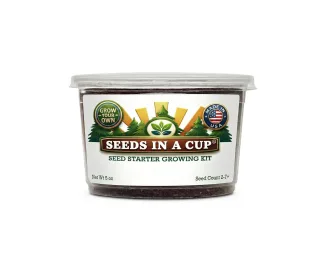
World Flora Online accepts Fraxinus americana L. Older names such as F. americana var. pennsylvanica refer to green ash (F. pennsylvanica), not white ash. NC State uses both 'American ash' and 'white ash'. White ash intergrades with Texas ash in Texas, and pumpkin ash may be a natural white x green ash hybrid. Grafted ornamental selections are cultivars, which seed will not reproduce.
01Start growing
A large, fast-growing native shade tree for sun to shade in moist, well-drained soil of almost any texture or pH; it needs more than 60 ft of space. Before planting, consider emerald ash borer (EAB). NC State says planting new ash is no longer recommended, because EAB typically kills an infested ash within 3-5 years. Sources: f2
02Does the seed need special treatment?
Required for spring sowing, because white ash seed has both seed-coat and internal dormancy. Seed from southern sources usually needs only cold-moist stratification: about 37°F (3°C) for 56-84 days in a plastic bag. Seed from northern sources does better with a warm phase first: about 68-86°F (20-30°C) for 30 days, then 41°F (5°C) for 60 days. Instead of pretreating, you can sow untreated seed outdoors in fall and let winter do the chilling; older stored seed tends to be more dormant. Sources: f1
03Germination
Germination is epigeal and can be slow or uneven; untreated seed may lie dormant for several years. In Forest Service tests, stratified white ash germinated about 54% on average at alternating 86/68°F (30/20°C), and 68% in one test at 77/59°F (25/15°C). Sources: f1
04Seedling care
Cover seed 1/4-3/4 inch (6-19 mm) deep. Mulch fall-sown seed and remove the mulch as soon as sprouting starts, and give light shade briefly after emergence. Nurseries normally plant out North American ash after one growing season. Sources: f1
05How long the starter cup lasts
The cup is a brief seedling stage only. White ash becomes a very large tree, and nurseries plant it out after about one season. Plant it where it can grow undisturbed, and remember that under some state EAB quarantines, moving ash seedlings is regulated. Sources: f1, f2, f5
06Mature size & space
Usually 60-90 ft tall (up to 120 ft) and 50-75 ft wide, and it needs more than 60 ft of space. The Forest Service gives 21-24 m (about 69-79 ft) at maturity, and Missouri Conservation says up to 90 ft with a 60 ft spread. Sources: f1, f2, f3
07Growing conditions
Suited to USDA zones 3-9 and native to eastern North America. It grows in clay, loam, sand or organic soils at acidic to alkaline pH, provided the soil is moist and drains well. Sources: f2
08Weather & tolerances
NC State rates it generally tolerant of urban conditions. Its brittle branches are prone to wind, snow and ice damage. Sources: f2
09Seasons, flowers & fruit
Male and female flowers grow on separate trees; the small purplish flowers appear in April-May before the leaves. Only female trees bear the single-winged seeds, which ripen in October-November and drop from September to December. The Forest Service lists 20 years as the minimum seed-bearing age, with large crops every 3-5 years, and fall color is yellow with purple tones. Sources: f1, f2
10Other ways to propagate
Seed is the standard method. Ash species other than green ash are not easily rooted from cuttings, so ornamental selections are budded or grafted. Seedlings are white ash, but you cannot tell whether a seedling is male or female until it flowers. Sources: f1, f2
11Pests & plant health
Emerald ash borer is the major threat: it typically kills an infested ash within 3-5 years, and Missouri Conservation expects nearly all ash trees there to die. Other pests include ash borers, carpenterworm, scale, leaf miners, fall webworm, ash sawfly, gall mites and aphids. Diseases include verticillium wilt, root rots, leaf spots, anthracnose, cankers and ash yellows, and seed weevils can damage seed crops. Sources: f1, f2, f3
12Plant safety
Pet toxicity is not verified: it was not found on the ASPCA pages checked. As a large tree with brittle limbs, it should not be planted close to buildings. Sources: f2
13Invasiveness & regulations
White ash is native and not invasive, though its seeds sprout prolifically in disturbed sites and untended yards. APHIS ended the federal EAB domestic quarantine on January 14, 2021, but some states keep their own. Minnesota's quarantine (Version 44, effective 7/23/2026) bans selling or moving ash nursery stock from quarantined areas, while Oregon's EAB control area regulates ash nursery stock in affected counties; both exempt ash seeds. Seedlings you grow count as ash nursery stock, so check your state department of agriculture before moving, selling or giving them away, and use only local or certified heat-treated firewood. Sources: f3, f4, f5, f6
14Garden uses
A traditional shade and street tree whose wood is used for baseball bats and tool handles. It is a caterpillar host for eastern tiger swallowtail and mourning cloak butterflies, and birds, squirrels and small mammals eat the seeds. Sources: f2, f3
15Native range
Native from Cape Breton Island and Nova Scotia west to southeastern Minnesota, and south to Texas and Florida. In North Carolina it occurs statewide except the lower coastal region. Sources: f1, f2