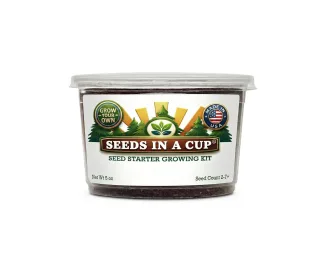
The product names only the genus, so species-level details (size, hardiness, sowing depth) depend on which species is in the seed lot. Genus Cedrus Trew (GBIF accepted). The USDA Woody Plant Seed Manual treats 4 (or fewer) closely related species: C. atlantica (Atlas), C. brevifolia (Cyprian), C. deodara (deodar) and C. libani (cedar of Lebanon). Some authors reduce these to two species (deodar and cedar of Lebanon), and NC State notes Atlas cedar was formerly C. libani subsp. atlantica. Many US trees called 'cedar', such as eastern redcedar, belong to other genera and are not Cedrus. Blue or dwarf cultivars like 'Glauca' or 'Shalimar' are propagated by grafting or cuttings and will not come true from seed.
01Start growing
True cedars are large evergreen conifers for sunny, well-drained sites with plenty of room. Hardiness depends on species. NC State lists cedar of Lebanon for zones 5a–7b, Atlas cedar for 6a–9b and deodar for 7a–9b; the Seed Manual gives narrower ranges for deodar (7–8) and Lebanon (5–7). None of them tolerates wet, poorly drained soil. Sources: C1, C2, C3, C4
02Does the seed need special treatment?
Helpful but not required. The USDA Seed Manual says cedar seed has little or no dormancy and will germinate without treatment, though dormancy can vary within one lot. Cold-moist stratification at 3–5°C (37–41°F) for about 2 weeks (6.5 weeks for Cyprian cedar) gives more even germination, and one study found 9°C (48°F) worked better than 3°C. In one deodar trial, 30 days in moist sand at 4°C (39°F) gave 45% germination vs 11% for unstratified seed. Sources: C1
03Germination
Standard seed tests germinate stratified seed for 3 weeks at 20°C (68°F), or at 20°C nights / 30°C (86°F) days for 4 weeks. Sow deodar about 1 cm (0.4 in) deep, because deeper sowing reduces germination; one study found 1.5 cm (0.6 in) best for cedar of Lebanon. Cedar seed is oily and short-lived, and seed dried too far may fail to take up water, so fresh seed matters. Sources: C1
04Seedling care
Deodar and cedar of Lebanon seedlings are prone to damping-off, a fungal rot at the soil line. Nurseries treat for it, so keep the mix moist but not soggy and give good air flow. Nurseries keep young seedlings in shade during summer and protect them from freezing on cold spring nights. Young deodars are easily hurt by frost and cold wind. Sources: C1, C2
05How long the starter cup lasts
The starter cup is only a temporary home. These trees eventually reach 30–60+ feet. Nurseries move cedar seedlings into containers and grow them for half a year to a year and a half before planting out. NC State notes that Atlas cedar and cedar of Lebanon are difficult to transplant, so move them up into deeper pots early and plant them in a permanent, roomy, sunny spot while still young. Sources: C1, C3, C4
06Mature size & space
These are big trees. NC State lists deodar at 30–50 feet tall and 30–40 feet wide, Atlas cedar at 40–60 feet by 30–40 feet, and cedar of Lebanon at 40–60 feet (recorded to 120 feet) by 30–50 feet. They are pyramidal when young, and Atlas and Lebanon become flat-topped with age. Plant well away from buildings and power lines. Sources: C2, C3, C4
07Growing conditions
They grow in clay, loam or sand across a range of pH, but always need good drainage. Cedar of Lebanon needs full sun. Deodar and Atlas cedar take full sun to part shade, and deodar benefits from shelter from wind. Sources: C2, C3, C4
08Weather & tolerances
NC State rates deodar moderately drought and salt tolerant, and Atlas cedar tolerant of heat, drought, salt and pollution. Heavy snow can break Atlas cedar branches. All three are rated highly flammable and should not be planted within a home's defensible space in fire-prone areas. Sources: C2, C3, C4
09Seasons, flowers & fruit
Pollen is shed in fall, and cones take about 17–18 months to mature, ripening in the second year and shattering on the tree to release winged seed. Seedlings take decades to bear seed: commercial seed production on deodar starts at about 30–45 years, with good crops about every 3 years. Cedar of Lebanon grows slowly, especially in its first 20 years. Sources: C1, C3
10Other ways to propagate
Seed is the usual way to grow the species. Named cultivars are normally grafted. Cuttings of Atlas cedar and cedar of Lebanon are hard to root, while deodar cuttings can root with rooting hormone. Sources: C1, C2, C4
11Pests & plant health
Pine needle scale affects all three species. Deodar is also listed for Armillaria and Phytophthora root rots, sooty mold, borers and red-headed pine sawfly. In seedlings, damping-off is the main problem. Sources: C1, C2, C3, C4
12Garden uses
They are grown mainly as large specimen or lawn trees for estates and parks, and as screens or windbreaks. Birds nest in the branches and squirrels visit the cones. Cedar of Lebanon wood is fragrant and decay resistant. Sources: C1, C2, C3, C4
13Native range
True cedars grow wild in mountains of North Africa and Asia. Atlas cedar is native to the Atlas Mountains of Morocco and Algeria, cedar of Lebanon to Turkey, Syria and Lebanon, Cyprian cedar to Cyprus, and deodar to the western Himalaya (Afghanistan, Pakistan, India). None is native to North America. Sources: C1