Accepted name Hibiscus rosa-sinensis L. (GBIF backbone match, accepted). UF/IFAS lists no synonyms. The garden plants sold as tropical hibiscus are largely hybrids and named cultivars, so seed from them gives variable offspring. This is a tropical evergreen shrub that can be trained into a small tree. It is not one of the hardy hibiscuses such as Rose of Sharon (H. syriacus).
01Start growing
Tropical hibiscus is an evergreen shrub that grows outdoors year-round only in USDA zones 9a to 11b. In colder areas, grow it in a container and bring it indoors to bright light before frost. Give it full sun to part shade and rich, moist soil with good drainage. It flowers on new growth. Sources: S1, S3
02Does the seed need special treatment?
Helpful but not proven to be required. Hobbyist hybridizers soak dried seed overnight and then carefully nick the black seed coat. A UF/IFAS propagation database also lists scarification for this species, but that page now redirects and we saw it only in a search snippet. Cold stratification is not called for in any source we found. Sources: S5
03Germination
Grower guidance (a hobbyist hibiscus site, not an extension source) says to sow seed 1/4 to 1/2 inch deep and keep it at about 80–85°F (about 27–29°C), with bottom heat if you can. Keep the mix moist but never soggy, because seed rots in wet media. Seedlings usually appear in about a week to a month. We found no extension figure for germination rate. Sources: S5
04Seedling care
Move seedlings to bigger pots once they have several sets of true leaves and the stems have begun to firm up. Get them used to direct sun gradually over several days, and keep them out of temperatures in the 40s°F. UF/IFAS notes that even a slight cold snap can yellow the lower leaves and make them drop. Sources: S5, S3
05How long the starter cup lasts
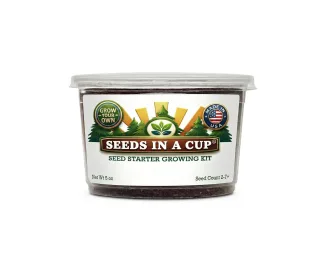
The starter cup is only a temporary home. This is a woody shrub that can reach 4 to 10 feet, so move seedlings into bigger pots once they have several sets of true leaves. After that, keep it in a large container or plant it outdoors in zones 9–11. Sources: S5, S1
06Mature size & space
Mature plants reach about 4 to 10 feet tall and 5 to 8 feet wide. Container plants stay smaller. Cutting the plant back by about half in early spring keeps it compact. Sources: S1
07Growing conditions
Give it full sun to part shade (2 to 6 hours of direct sun works), soil high in organic matter, and evenly moist roots. It likes high humidity and needs shelter from wind and frost. Indoors, it can grow in a large container in bright light. Sources: S1
08Weather & tolerances
It does not tolerate frost. In North Florida it freezes to the ground but usually comes back from the roots, and in Central and South Florida it stays green all year. Moving the plant can make it drop leaves and buds. NC State lists it as deer resistant. Sources: S1, S3
09Seasons, flowers & fruit
Established plants can bloom in spring, summer and fall. Each funnel-shaped flower, 3 to 6 inches across, lasts only one day. Grower reports put the first flowers on seedlings at about 6 to 24 months after sowing, depending on warmth and care. No extension source confirmed that range. Sources: S1, S5
10Other ways to propagate
NC State lists stem cuttings as the propagation method. Use cuttings when you want a copy of a particular flower, because they reproduce the parent plant and seed does not. Seed is mainly how breeders get new, one-of-a-kind plants. Sources: S1, S5
11Pests & plant health
Watch for scale, aphids, whiteflies and mealybugs, which tend to gather on leaves and flower buds. Their honeydew can lead to sooty mold. UF/IFAS says early infestations are easily controlled with insecticidal soap or horticultural oil, and warns against using malathion on hibiscus. Sources: S1, S3
12Plant safety
Pet safety for this species is not verified. The ASPCA's "Hibiscus" entry is for Hibiscus syriacus (Rose of Sharon), a different species, which it lists as non-toxic to dogs, cats and horses. We found no ASPCA entry for H. rosa-sinensis, and NC State gives no toxicity information. Keep plants and seeds away from pets that chew. Sources: S4, S1
13Invasiveness & regulations
The UF/IFAS Assessment of Non-native Plants rates H. rosa-sinensis "Not a problem species" in North, Central and South Florida (assessed 2005, 2015 and 2025). We did not check other states' lists. Sources: S2
14Garden uses
Grow it as a container plant, a houseplant, a hedge or screen, or a single accent shrub. The flowers draw hummingbirds, butterflies and other pollinators. Sources: S1
15Native range
Native to tropical Asia. It is widely planted in warm climates, including South and Central Florida. Sources: S1, S2, S3